Small Business Marketing
Facebook Ads for Restaurants
Saturday fills itself. We point Meta ads at the covers you’re actually missing: fifteen seconds of dish video, a radius you could deliver to, and offers that land on the nights your room runs quiet.
What our clients say
Trusted by small businesses


Can Facebook ads really fill a restaurant on its slow nights?
That’s the one job they do best. A short dish video with a reason to come in, shown to people within a quick drive, runs in the days ahead of your quiet stretch. We aim the spend at Sunday through Wednesday covers, push catering and private events to the right crowds, and collect emails so each slow night costs less to fix than the last one.
Tuesday covers are a media problem, not a menu problem
Your food on a Tuesday is the same food that packs the room on Saturday. What changes is attention, and attention can be bought by the day of the week. That’s the core of how we run restaurant accounts: the budget concentrates on promoting your slow nights, launches a few days ahead so plans can form, and goes dark for the nights that sell themselves.
The offer matters less than owners think. A midweek special helps, but so does a wine pairing, a half-price app window, trivia, or simply reminding three square miles of people that the short rib exists. What matters is the aim: people close enough to come tonight or this week, not a metro-wide audience who will never drive past your block. We usually hold the radius to the distance of an easy weeknight decision, because a Tuesday diner isn’t crossing two towns for anything.
Timing is the quiet half of the trick. Dinner decisions get made between late afternoon and seven, so that’s when the ads run heaviest, and a Thursday push for a Sunday jazz brunch starts Thursday, not Sunday morning. None of this is complicated; it’s just work that doesn’t happen when the owner’s running the ads between services.
Point the camera at the pass, not a stock library
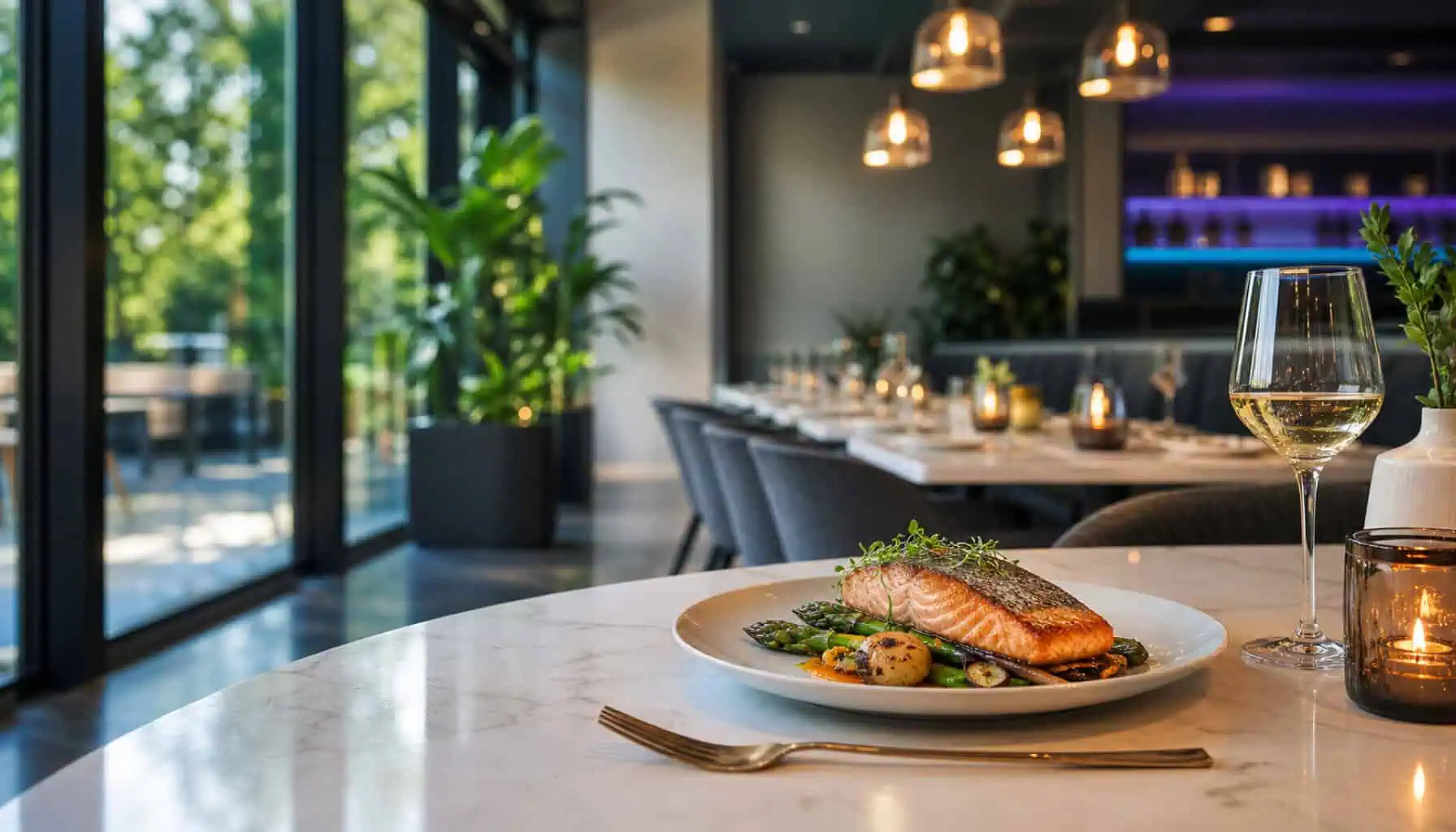
Restaurant creative is the easiest in all of local advertising because the product is beautiful and you make it fresh every day. Fifteen seconds of steam coming off a plate, shot on a phone at the pass, outperforms any polished stock footage, which diners clock as fake instantly. The room matters too: a quick pan of a full bar on a Friday tells people what it feels like to be there, and feelings are what book tables.
We ask kitchens for three kinds of clips and nothing more. The plate, up close. The hands, cooking or pouring. The room, alive. From those we cut everything the account needs for a month: specials, new menu drops, event promos, holiday pushes. Your chef never has to perform, your staff never has to dance, and the brand on screen is the restaurant you actually run. If you’ve already got a camera roll full of plates, that’s a month of ads sitting in your pocket right now.
Where a restaurant’s ad money actually goes
A typical month of spend for a full-service spot breaks into four jobs, in this order of priority:
- Slow-night campaigns: the midweek push described above, the workhorse that pays for everything else.
- Launches and seasonality: new menu, patio opening, restaurant week, the holidays. Short bursts with their own creative and their own dates.
- Catering and private dining: aimed at office managers, event planners and the people organizing rehearsal dinners. Higher ticket, longer lead time, worth its own budget line.
- List growth: a signup offer that trades a small perk for an email or SMS opt-in, quietly building the asset below.
Each line reports separately, so you’ll know whether the money filled seats, booked functions or grew the list, instead of staring at one blended number that explains nothing.
Ads rent attention. The regulars list owns it.
Here’s the uncomfortable economics of paid social for restaurants: you pay every single time you want to be seen. The way out is to make the ads build something you keep, which is the list. Every campaign we run pushes a slice of its audience into email and SMS, and that list is the lever you pull on a rainy Wednesday at no cost at all: a text about tonight’s special moves tables within the hour.
That flywheel, paid reach converting into owned reach, is what separates restaurants that advertise forever from restaurants that advertise less each year. We build the capture, the welcome offer and the sending cadence as part of the lead and list system, keep your Google profile doing the discovery work for people searching hungry, and scope the whole thing as one package. It fits independent full-service spots and small groups best; the owner should want the room full, not just the follower count up.
The BAO Method
A proven, transparent process, not a black box.
1. Discover
A free call to understand your goals, market and what’s holding growth back.
2. Plan
A custom plan: the exact channels you need, scoped to your budget.
3. Build & Launch
We build and launch it for you: site, campaigns and systems.
4. Grow & Report
We optimize monthly and report on the metric that matters: leads.
Why work with Business All In One
All-in-one
One partner for every channel, no juggling vendors or finger-pointing.
Done-for-you
You run your business; we run the marketing, end to end.
Industry-proven
Real results since 2017 across the trades and local services.
No lock-in
Clear scope, transparent monthly reporting, month-to-month.
Frequently asked questions
Is boosting a post the same as running a real ad?
No. Boosting buys reach with almost no control over objective, audience or placement. Proper campaigns choose the goal and the diner. We wrote up the difference in plain terms in our boosted post versus Facebook ad guide.
Don’t the delivery apps make my own ads pointless?
The apps bring orders and keep the customer data, plus their cut. Your own ads bring diners into your room and your list, where the margin and the relationship live. Both can run; only one builds your business.
How will I know the ads produced actual covers?
Reservation link tracking, offer redemptions and comparing covers on promoted nights against your baseline. It’s not laboratory-perfect, but patterns show within a few weeks and we report them straight.
Can the same account sell catering and functions?
Yes, and it should. Function business has the best margins in the building, and a separate campaign aimed at planners and office managers keeps that pipeline moving without touching the dinner budget.
What should a neighborhood spot spend to start?
Less than most owners fear. Tight radius targeting means small audiences, and small audiences cost little to reach well. We size it to your room count on the free call and adjust once real numbers come in.
Related
We build these campaigns to Meta’s advertising standards, and the Meta Business Help Center documents the ad tools we manage on your behalf.
Ready to grow?
Book a free, no-pressure discovery call. We’ll map the right plan for your business in about 20 minutes.