
Small Business Marketing
Web Design for Masonry and Landscaping Companies
A paver patio gets bought with the eyes, months before the shovels. We design masonry and landscaping sites that read like a portfolio and turn winter daydreams into booked spring consults.
What our clients say
Trusted by small businesses


Why build a masonry and landscaping website like a design portfolio?
Because the buyer is purchasing a backyard they’ve already pictured. Hardscape customers search the project itself, paver patio, retaining wall, outdoor kitchen, and they judge you on photographs before reading a word. A site organized by project type, with finished-space photography and short project stories, earns the design consult. A bulleted services list can’t carry tickets this size.
Organize the site the way backyards get imagined
Nobody searches for a masonry contractor first. They search for the thing they want to stand in next summer, which means each project type earns its own page and its own gallery.
Paver patios
The volume search. Show pattern, border and scale choices on real yards, because this buyer compares layouts the way other people compare paint chips.
Retaining walls
Part engineering, part looks. Long straight courses and tidy grading prove the craft, and a note on drainage shows you know why walls fail.
Outdoor kitchens
The premium intent. These buyers want full-space shots, counter and appliance context, and evidence you’ve run gas, water and stone together before.
Fire features
Often the add-on that grows a patio job. Dusk photography sells these better than any paragraph ever will.
Walkways, steps and veneer work still belong on the site, grouped under a smaller-projects page that catches the searches above a repair but below a full build. Those jobs fill schedule gaps and often audition you for the patio two years later.
Photography that justifies a premium quote
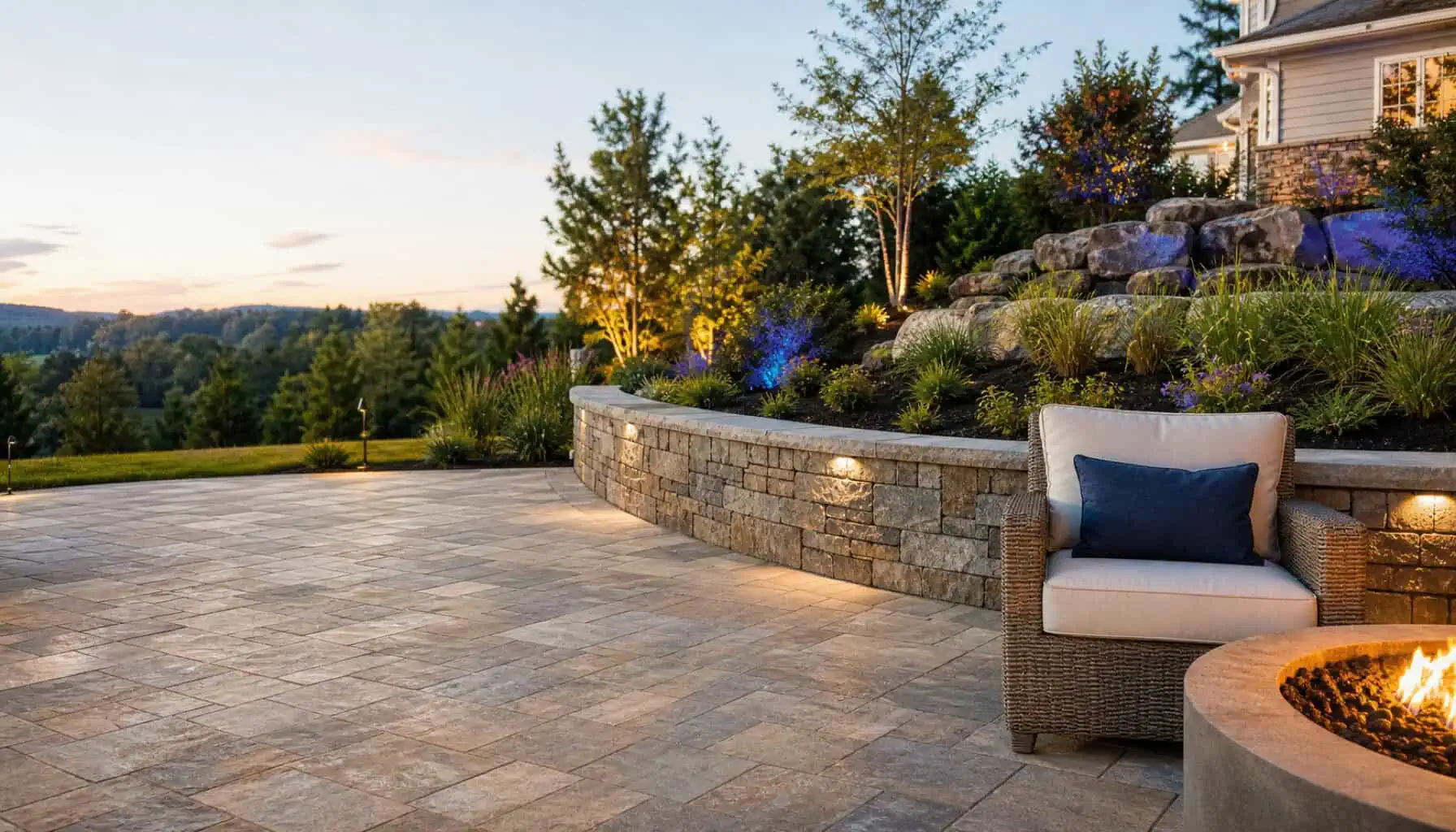
In this trade the website gets judged like the stonework. We organize galleries around whole finished spaces, not close-ups of cut stone: the patio with the furniture on it, the wall holding back a real slope, the kitchen at dusk if a client lets you shoot it. Wide shots, a before photo where one exists, and a few lines about the design and the build turn a picture into a project story.
Those stories also quietly set the budget. When a page walks through a real design, the materials chosen and the weeks it took, visitors sort themselves: the ones who reach out already understand the scale of what they’re asking for. Your consult calendar fills with better conversations and fewer tire kickers.
One warning from experience: don’t let the gallery age. A portfolio whose newest project is three summers old whispers that the good crew left. Two or three fresh projects a season, added with their stories, keeps the site reading like a business in demand, which is its own kind of proof at this price point. If you’ve got drone shots, use them sparingly: one overhead per project to show scale, then back to eye level where buyers imagine standing.
Sell the consult as a design visit, and sell it in winter
Your conversion point isn’t a quote form; it’s a design consultation. The site should frame that visit as the first step of designing their space, what you’ll walk, measure and sketch, rather than a salesperson’s appointment. Framed that way it books easier, and the people booking it are serious.
Timing matters as much as framing. Homeowners plan hardscape in winter and early spring, long before build season, so the site has to work hardest while your crews are idle. A simple follow-up rhythm for the slow deciders, run through the CRM we built ourselves, keeps a January inquiry warm until the April consult.
The consult page itself should name what happens next: the walk, the sketch, the proposal and roughly when each arrives. Buyers planning a serious backyard project forgive a wait they can see the shape of; what they won’t forgive is silence after the form. A short seasonal note helps too, so winter visitors know that booking now means breaking ground early.
One trade page inside a bigger plan
This page covers the website; the demand side has its own homes. SEO for masonry and landscaping targets the project searches, local SEO keeps you visible in the towns where the budgets live, and the full strategy sits on our masonry and landscaping marketing page.
Fit-wise, we do our best work with owner-led crews whose photos are already better than their website, which describes most of the good ones. A free call and the packages page will show how we’d scope yours, with no long-term commitment attached.
Because the trade is seasonal, the reporting follows the season too. Winter months get judged on consult requests and spring bookings rather than raw traffic, so you’re never staring at a slow-January chart wondering what you paid for.
The BAO Method
A proven, transparent process, not a black box.
1. Discover
A free call to understand your goals, market and what’s holding growth back.
2. Plan
A custom plan: the exact channels you need, scoped to your budget.
3. Build & Launch
We build and launch it for you: site, campaigns and systems.
4. Grow & Report
We optimize monthly and report on the metric that matters: leads.
Why work with Business All In One
All-in-one
One partner for every channel, no juggling vendors or finger-pointing.
Done-for-you
You run your business; we run the marketing, end to end.
Industry-proven
Real results since 2017 across the trades and local services.
No lock-in
Clear scope, transparent monthly reporting, month-to-month.
Frequently asked questions
Our season runs April through November. When should we build the site?
Late fall into winter, so it’s live while homeowners are planning next year’s project. A site launched in June misses the design season that fills the following spring’s calendar. We build in your quiet months so you never trade a crew day for a website meeting.
Most of our photos are mid-construction. Will they work?
Construction shots support the story but don’t sell the dream. We’ll build the structure now and go back for finished-space photos of your best completed jobs, which most clients happily allow once you ask. A finished-space shoot usually takes one afternoon per project.
Should masonry and landscaping get separate sections?
Organize by project, not by trade. A homeowner wants a patio with plantings around it, not a lesson in which crew does which part. Project pages let the stone and the green work sell together.
How does the website reach the higher-budget towns?
Partly through photos recognizably set in those towns, partly through town-level pages and local SEO. Buyers at that level look for proof you’ve already built nearby at their standard of finish. One recognizable backdrop does more than a page of adjectives.
Do you write the project stories or do we?
We do, from a short set of questions about each job: the brief, the materials, the one tricky problem. Ten minutes of your foreman’s memory becomes the copy on the page.
Related
We benchmark every build against Core Web Vitals and Google’s page experience guidance.
Ready to grow?
Book a free, no-pressure discovery call. We’ll map the right plan for your business in about 20 minutes.