
Small Business Marketing
SEO for Masonry and Landscaping Companies
Homeowners don’t search for a mason; they search for the patio they’ve been picturing all winter. We build the project pages that put your stonework in front of them first.
What our clients say
Trusted by small businesses


How should a masonry and landscaping company approach SEO?
Organize the site around projects, not trades. Hardscape buyers search “paver patio”, “retaining wall” or “outdoor kitchen” with a town attached, so each project type gets its own page, filled with your finished work. Point those pages at the towns where the budgets live, and have them ranking by late winter, when backyard planning begins.
Searchers type the backyard, so the site gets organized by backyard
A “masonry and landscaping services” page is invisible to the person who wants a bluestone patio, because that person never types anything like it. Hardscape demand arrives as project searches, each with its own volume, its own ticket size and its own set of anxieties to answer. The site that wins is the one arranged the way the buyer dreams.
- Paver and bluestone patios: the volume leader, searched with materials and towns attached, decided by photos
- Retaining walls: part project, part problem-solving; drainage and permanence questions dominate
- Walkways and steps: smaller tickets that introduce your work and seed the bigger project later
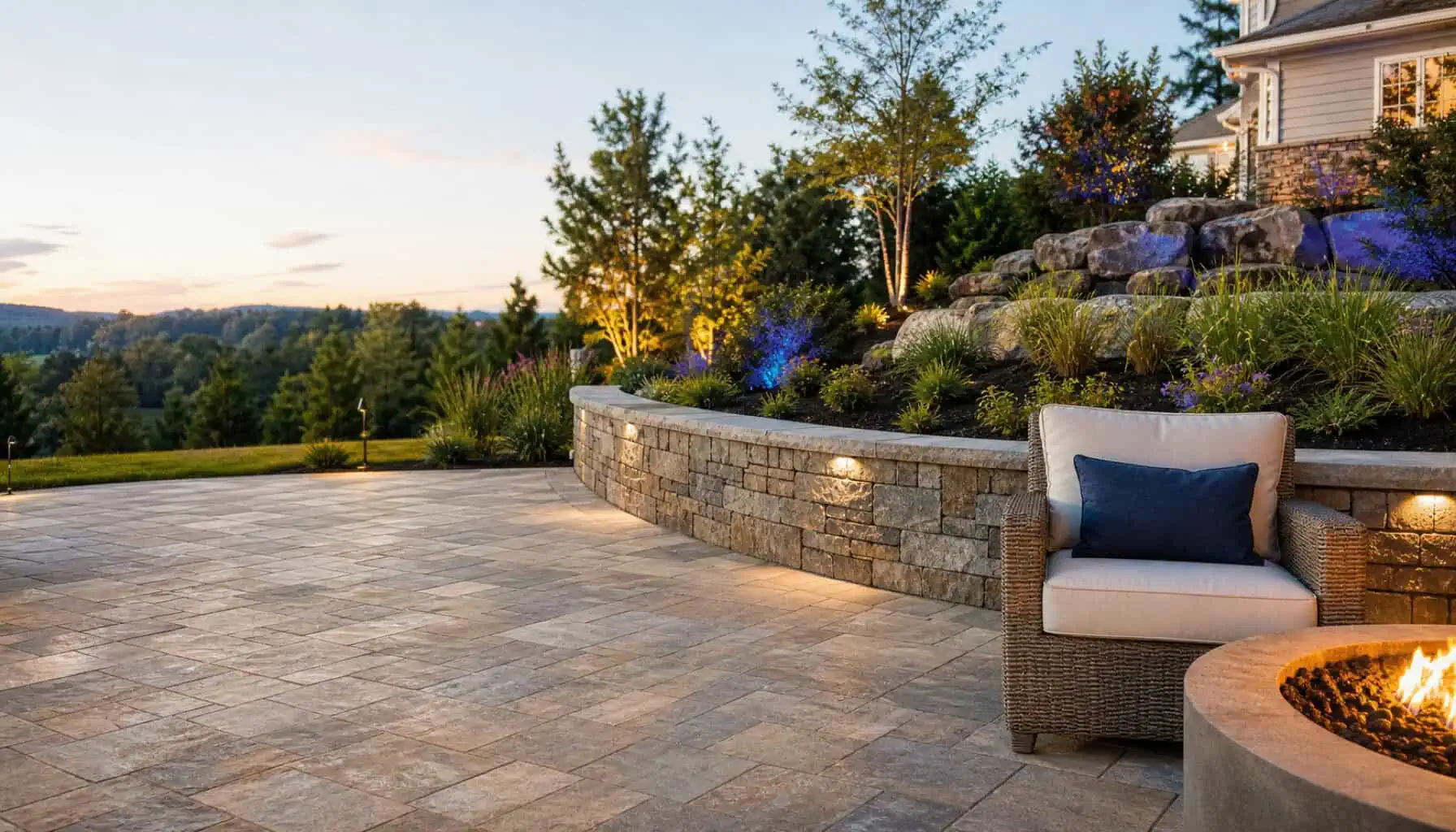
- Fire pits and outdoor kitchens: the premium end, where an inspiration search becomes a design consult
- Stone and chimney repair: steady, year-round searches in older towns that most hardscape outfits ignore
Each of these becomes a page carrying your real projects, built to collect its own search family. Repair deserves a word of its own: it’s unglamorous, but in New England’s aging stone housing stock it brings calls in months when nobody is planning a patio, and a repointing customer with a big backyard is a patio prospect you’ve already met.
The patio is searched in February and built in June
Hardscape runs on two calendars. Crews build from spring through the first frost, but the deciding happens earlier, in the planning season, when homeowners scroll ideas in the dark months and start pricing what summer could look like. By the time the ground thaws, most serious projects already have a shortlist.
The searches themselves change along that arc. Early on they read like ideas: patio designs, fire pit layouts, wall materials. Closer to spring they sharpen into hiring language, with a town or a “near me” attached. A well-built project page catches both ends, feeding inspiration to the February scroller and credentials to the April decider, so you’re present for the whole slide from picture to purchase.
That lag defines the SEO schedule. Pages, photos and reviews get strengthened in fall and early winter so rankings peak when the planning searches arrive. It also means a slow December isn’t a marketing failure; it’s the moment the next season gets won or lost. We’ve watched companies start this work in May and wonder why the phone stays quiet: the season’s buyers were captured back in March.
Aim the rankings at the towns that build outdoor kitchens
An outdoor living project is a discretionary, design-led purchase, and the demand concentrates in specific zip codes. Ranking everywhere is a waste of effort; ranking in the handful of affluent towns around you is the whole game. We draw your target map from where the budgets actually live, then build town-and-project pages for those places, supported by local SEO for masonry and landscaping companies so the map results and reviews read as premium as the work.
Your portfolio does double duty here. The finished-space photos that convince a homeowner also tell Google what you build and where, through named files, alt text and pages that give each project a story. A gallery dumped into a slider helps nobody; the same photos, structured, become the strongest ranking asset a stone company owns. When an inspiration search turns into a consult request, the masonry and landscaping marketing plan makes sure that request books a design visit instead of sitting in an inbox.
What a season of this looks like
You’re not buying rankings for their own sake; you’re buying a fuller consult calendar in the towns you chose. Monthly reporting shows consult requests by project type and town, so you can see the fire pit page paying for itself and decide which project family deserves the next push. Some clients add Google Ads during the planning-season peak to double their presence while organic grows. It’s scoped on a free 20-minute call, runs month to month, and there’s no contract to climb out of if your plans change.
The BAO Method
A proven, transparent process, not a black box.
1. Discover
A free call to understand your goals, market and what’s holding growth back.
2. Plan
A custom plan: the exact channels you need, scoped to your budget.
3. Build & Launch
We build and launch it for you: site, campaigns and systems.
4. Grow & Report
We optimize monthly and report on the metric that matters: leads.
Why work with Business All In One
All-in-one
One partner for every channel, no juggling vendors or finger-pointing.
Done-for-you
You run your business; we run the marketing, end to end.
Industry-proven
Real results since 2017 across the trades and local services.
No lock-in
Clear scope, transparent monthly reporting, month-to-month.
Frequently asked questions
Do homeowners really search for patios in the winter?
They do, heavily. Planning searches climb through late winter while build-season searches peak in spring. The companies ranking in February meet the buyers with the biggest budgets and the longest lead times, which is why we do the ranking work in the fall.
Should repair work share a page with new hardscape projects?
No. A repair searcher has a problem; a patio searcher has a dream. Separate pages rank for separate searches, and the repair page quietly introduces your bigger work to homeowners who’ll want it later.
Can SEO really target the wealthier towns specifically?
Yes, that’s much of the craft here. Town-and-project pages, reviews from those addresses and a service area drawn on purpose all steer rankings toward the places you name. You can’t pick the searcher, but you can absolutely pick the town. It takes a season of consistent signals, and then the leads start arriving pre-sorted.
Our work speaks for itself in photos. Does Google actually see them?
Google reads everything around them: file names, alt text, captions and the page the photo lives on. We structure your galleries so each project tells Google what it is and where it was built, which turns your best asset into ranking fuel.
Is it a problem that we sell through design consults, not quotes?
It’s an advantage, and the site should frame the visit that way. Pages that end in “book a design consultation” attract the planning-stage buyer you want and filter out the three-bid price shopper you don’t.
Related
None of this bends the rules: see Google Search Essentials and, for the mechanics underneath, Google’s SEO Starter Guide.
Ready to grow?
Book a free, no-pressure discovery call. We’ll map the right plan for your business in about 20 minutes.